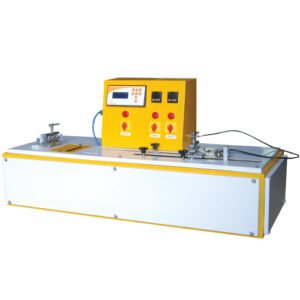
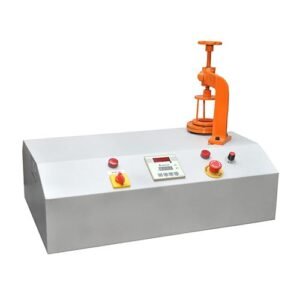
Collapse Test Apparatus
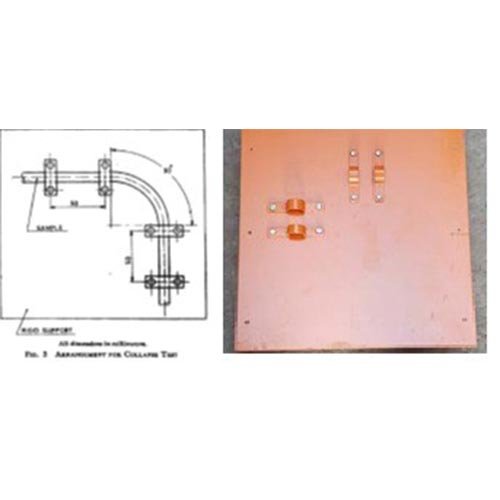
Standard – IS 9537
Purpose: To ensure the conduit retains its circular shape after bending and exposure to heat, preventing inner bore collapse.
Applicable Sizes: Generally applies to 16 mm, 20 mm, and 25 mm rigid plain conduits.
Procedure:
Samples are bent using a specific apparatus.
Bent samples are placed in a heating cabinet at 60°C ±2°C for 24 hours.
After cooling, a test gauge is passed through the pipe to check for flattening or deformation.
- Performance Requirement: The minimum internal diameter must allow a specific gauge to pass through under its own weight without resistance, confirming no significant flattening or internal collapse has occurred.
- Failure Criteria: The difference between the initial diameter and the diameter after the test must not exceed 10% of the original outside diameter.
- This support is made from Strong Mild Steel Plate.
- To avoid rusting it is powder coated or painted by special paint.
- It is mounted with rigid clamps to hold the conduit in place during the test.
- The threads are made such that multiple times opening and closing of the clamps does not affect the thread.
- The Clamping bolts are Zinc coated to avoid rusting
• Compression Mechanism: Features a, motorized or manual mechanism that applies a controlled compressive force to the conduit specimen.
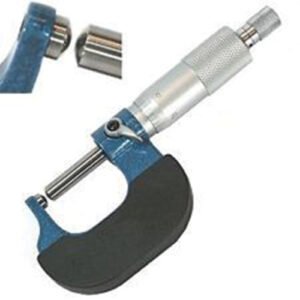
• Precision Gauges: Typically includes multiple gauges (e.g., 16mm to 50mm sizes) used to check the minimum internal diameter of the conduit after the test to assess the level of deformation.
• Robust Construction: Generally built with a strong, metallic, often powder-coated steel frame for stability during testing.
• Sample Holding Fixtures: Equipped with holding clamps to securely position the conduit during the test.
• Digital/Analog Display: (only for Parallel plate compression) many modern models feature a digital display for precise measurement of load, pressure, or compression distance (Optional).
• Safety Features: Includes auto-stop functionality and overload protection to ensure safe operation.
• Customization & Range: Capable of handling various conduit diameters and lengths, frequently designed as table-top models for laboratory use.