Salt Spray Chamber
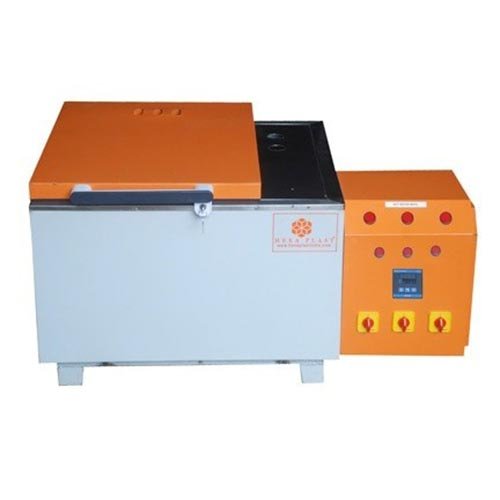
A salt spray chamber, or corrosion test chamber, is a specialized laboratory apparatus designed to accelerate and evaluate the corrosion resistance of metallic materials, surface coatings, and industrial components. It works by atomizing a saline solution (usually 5% sodium chloride) through precision nozzles to form a dense, uniform fog within a highly controlled temperature and humidity environment. This simulated marine climate accelerates natural corrosion over a period ranging from 24 to over 1,000 hours, allowing engineers to benchmark product durability quickly.
Applications of Salt Spray Chamber
- Plastics products – Painted or Chrome plated
- Electronics
- Fasteners Testing
- Non-metal Materials
- Springs Testing
- Bath Fittings
- Hardware Items
- Handicraft
- White Goods
Applications of Salt Spray Chamber – Industry wise
- Automotive:Vehicle parts, coatings, etc
- Aerospace:Parts exposed, Wings, Cabin components, etc
- Electronic:Integrated circuits, switches, shielding parts, etc
- Construction:Concrete, metal, powder coatings, etc
- Home Appliances: Coolers, Mixers, Washing machines etc
Technical Specifications
The exact specifications vary by cabinet size (ranging from 100-liter benchtop units to 2,600+ litre walk-in systems), industry-standard configurations adhere closely to the following baseline parameters:
|
Parameter |
Standard Technical Specification |
|
Internal Temperature Range |
Ambient to +50°C / 60°C (Controlled precisely to ±1°C or ±2°C) |
|
Air Saturator Temp Range |
Ambient to +65°C |
|
Salt Solution Concentration |
5% NaCl by weight (Lab-grade Sodium Chloride in demineralized water) |
|
Solution pH Range |
6.5 to 7.2 (Neutral), or adjusted lower for acid accelerated variants |
|
Fog Fallout Collection Rate |
1.0 to 2.0 ml per hour per 80 cm² collector area |
|
Air Pressure Requirement |
0.7 kg/cm² to 1.7 kg/cm² (Adjustable via regulator, 0–30 psi) |
|
Chamber Humidity |
Maintained at 95% to 98% Relative Humidity (RH) |
|
Timer / Digit Meter |
Up to 999,999 hours (6 digits) with automatic cut-off memory |
The popular product is 100 liter capacity. We have capability to provide the capacity based on the test standard or as per the customer need.
- Pneumatic Canopy Control: Allows effortless opening/closing of the heavy top lid using air cylinders, enhancing operator comfort and safety.
- Automatic Fresh Air Purge: Flushes out corrosive gases prior to the canopy opening, protecting the operator’s health and clothing.
- PID Temperature Control: Sophisticated digital algorithms connected to zero-corrosion PT100 sensors to keep temperature fluctuations minimal.
- Cyclic Corrosion Capabilities: Advanced models can automatically cycle between salt spray, high humidity, forced dry air, and ambient conditions to better mimic real-life atmospheric shifts.
- Touchscreen HMI Interface: High-end models feature multi-language 7-inch touchscreen panels for complex multi-step programming and continuous data logging. (Optional feature/model dependent)
Core Components
A salt spray chamber consists of an integrated closed-loop testing environment containing several critical subsystems:
- Enclosure / Main Chamber Body: Constructed from corrosion-resistant materials such as thick Fiber Reinforced Plastic (FRP) to ensure a long operating life and zero material decay from the salt fog.
- Pneumatic Canopy / Hood: Designed with a specific rooftop angle (preventing accumulated condensation droplets from falling directly onto the test specimens) and equipped with an air-tight dry-seal gasket.
- Atomizing System: Employs non-crystallizing quartz or borosilicate glass nozzles that break down the brine into a finely dispersed, uniform mist without blocking over long cycles.
- Air Saturator: A pressurized cylinder that heats and humidifies the incoming compressed air before it reaches the nozzle, preventing the salt solution from drying out.
- Brine/Solution Reservoir: An integrated storage tank holding the prepared NaCl solution, often featuring auto-refilling options.
- Specimen Holders: Standard V-groove trays, hanging rods, or panel slots designed to hold test items at angles between 15 to 30 degrees to ensure even fog exposure.