DSC /OIT Tester
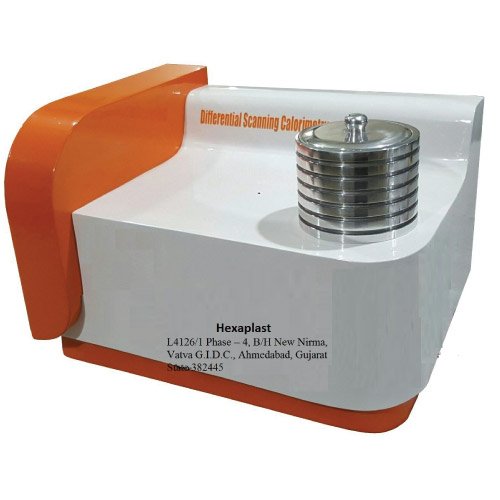
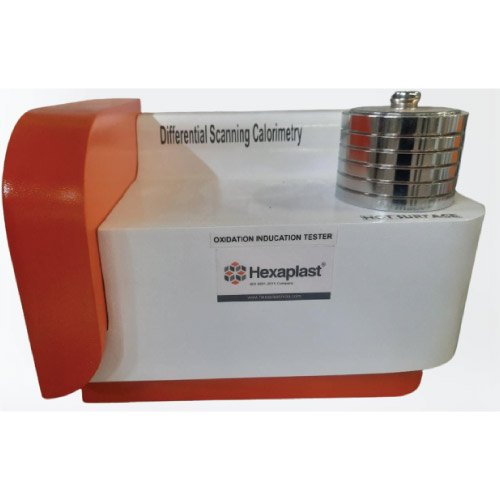
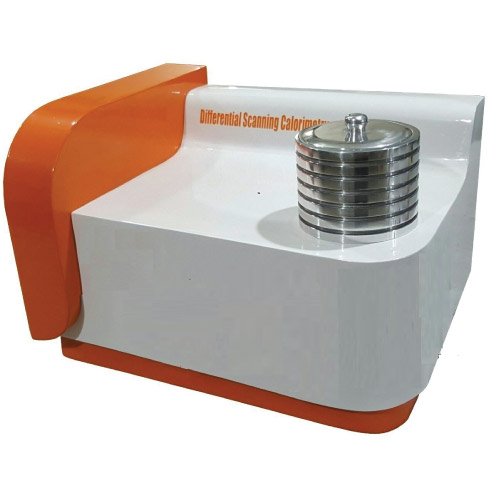
A DSC-OIT tester is an analytical instrument that uses Differential Scanning Calorimetry (DSC) to measure the Oxidative Induction Time (OIT) of materials, primarily polymers like polyethylene. It is used to determine how long a material can resist oxidation when exposed to heat and oxygen, which helps predict its long-term durability and the effectiveness of added antioxidants.
- Plastic Manufacturing: Testing PE (polyethylene) pellets and pipes to ensure quality control before and after production.
- PE Pipe Industry: Testing of PE pipe Raw material and Pipe after its production.
- Cable Industry: Evaluating the oxidative stability of wire coating materials.
- Oils & Petrochemicals: Assessing the stability of lubricants and cold-pressed oils during storage.
- Research & Development: Studying the influence of different antioxidants or catalytic effects (like copper) on polymer longevity.
According to ASTM D3895, ISO11357, EN728, ASTM D3418, ISO 11357, ASTM E967, ASTM E968, ASTM E793, ASTM D3895, ASTM D3417, ASTM D3418, DIN 51004, DIN 51007 and DIN 53765.
- Up to 300°C
- Including standard Tin, Indium pellets for calibration checkout
- 100 pcs of aluminium pans
- Software (windows based software including Report out to WORD)
- N2 and O2 rotameter mass flow controller
- Hoses and connectors
- Software also has data export to advantage Software for analysis
- DSC measuring cell according to the heat flux principle
- Temperature sensors for control & sample temperature
- Connection for Purge gas flow to the sample for 2 gas types
- Temperature accuracy 0.1 C
- Sensitivity: 3.6 to 4.0 μV/mW
- Sensor Time constant: 2.5 s
- Calorimeter accuracy of ± 2%
- Calorimetric precision of ± 0.5% or better
- Two connections for purge gas-Inlet to the sample & 1 connection for cooling air
These testers are designed for high precision in industrial and laboratory settings, often featuring:
- Temperature Control: Most models operate from room temperature up to 300°C or even 500°C. They use highly stable PID temperature control to maintain consistent isothermal conditions.
- Atmosphere Management: Built-in gas controllers automatically switch between an inert gas (like Nitrogen) and an oxidizing gas (like Oxygen or Air) during the test.
- Sensor Technology: Advanced sensors, such as heat-flux sensors with multiple thermocouples, ensure high sensitivity to detect the exact onset of the exothermic oxidation reaction.
- Data Interface: Typically includes a USB or RS485 connection for PC communication, allowing specialized software to record curves and automatically calculate OIT values.
- Standard Compliance: These machines are built to comply with international standards such as IS 4984,ISO 11357-6, ASTM D3895, and EN 728.