Conduit Bending Test Equipment

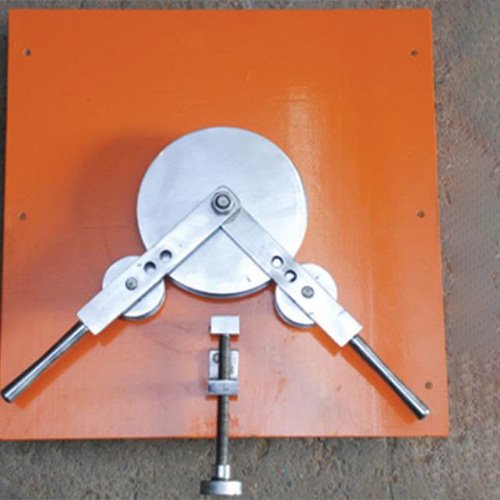

Conduit bending equipment consists of manual, hydraulic, or electric tools and machines used to shape, curve, and manipulate electrical conduits. They allow installers to route wiring around structural obstacles while protecting cables inside. These devices bends by utilizing custom dies and shoes that match the pipe’s diameter and wall thickness as per test standard.
Manual Benders: Portable, hand-held tools featuring an elongated handle, a shoe (curved grooved mould), and an angular degree scale. They are ideal for quick, on-site adjustments
- Testing of UPVC Rigid conduits
- Testing of any other plastics conduits
- Supported Materials: Mild steel, galvanized iron, EMT (electrical metallic tubing), aluminium, copper, and thick-walled PVC.
- Pipe Sizes (Diameter): Typically ranges from 12.5 mm (1/2-inch) to 50 mm (2-inch) for handheld tools, extending up to 150 mm+ (6-inch) for heavy industrial and hydraulic equipment.
- Bending Angles: Adjustable, capable of creating precise bends from 5-degrees to 180-degrees (such as 90-degree stubs, offsets, and back-to-back bends).
- Wall Thickness: Handles gauges ranging from 0.8 mm to 5.0 mm depending on the conduit material and the capacity of the die.
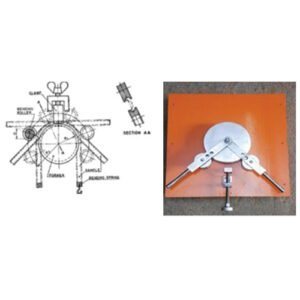
- Overall Dimension of Base plate:500 mm X 500 mm to support the test specimen
| Size of Conduit | Radius to Bottom of Groove of Former | Radius of Arc Traced Out by Centre of Bending Roller | Radius of Groove of Former and Bending Roller | Diameter of Bottom Groove of Bending Roller |
|---|---|---|---|---|
| 16 | 48 | 84 | 8.1 | 24 |
| 20 | 60 | 105 | 10.1 | 30 |
| 25 | 75 | 131.25 | 12.6 | 37.5 |
- Base plate made out of MS plate for rigid support.
- Powder coated to make it rust free
- Moving parts use ball bearing or bush bearing for easy movement
- Handles chrome plated for long life